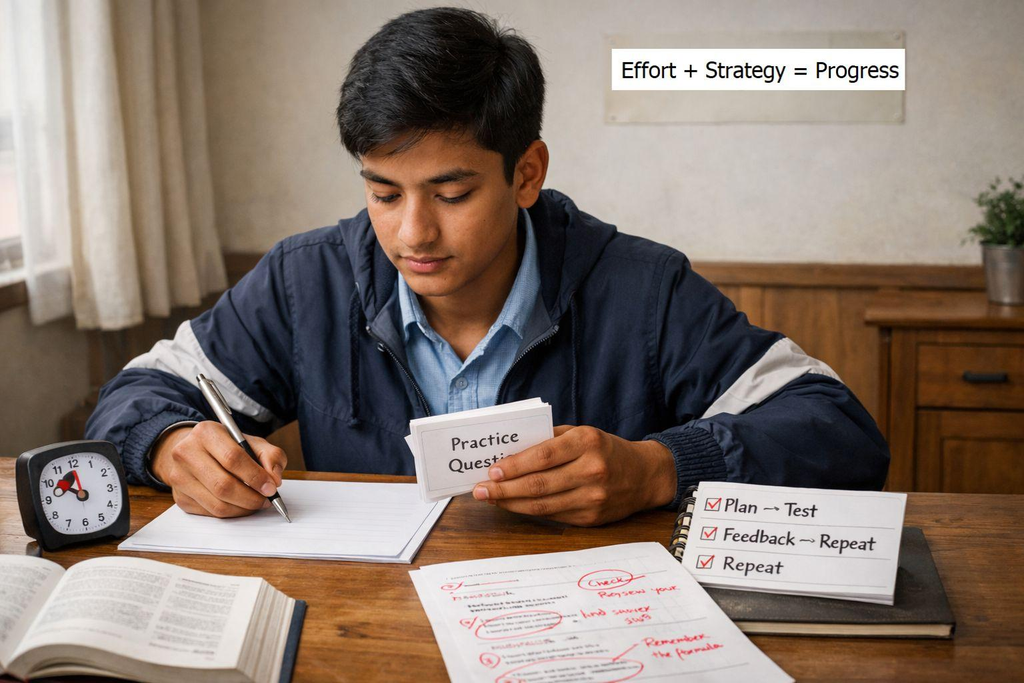
Introduction: Your Growth Starts With Small Decisions
Being a student is about more than attending classes, completing assignments and preparing for exams. It is also a period when you develop habits, skills, confidence and attitudes that can influence your future.
This is where Personal Development & Productivity become important.
Personal development is the process of improving yourself through learning, self-awareness, skill development and positive habits. Productivity is about using your available time, energy and attention effectively to accomplish meaningful goals.
However, productivity does not mean being busy every minute of the day.
For students, real productivity means making progress without constantly feeling overwhelmed.
Whether you want better grades, stronger communication skills, improved confidence, better time management or preparation for your future career, developing the right habits can make the journey easier.
The good news? You don’t have to transform your entire life overnight.
Small improvements, repeated consistently, can create significant long-term results.
What Is Personal Development & Productivity?
Personal development focuses on becoming a better version of yourself.
It can include:
- Building confidence
- Improving communication
- Developing emotional awareness
- Learning new skills
- Creating healthier habits
- Setting meaningful goals
- Developing resilience
- Improving decision-making
Productivity focuses on how effectively you use your resources—particularly your time, attention and energy.
For students, this might mean:
- Planning study sessions
- Prioritizing assignments
- Reducing distractions
- Avoiding procrastination
- Organizing notes
- Creating realistic schedules
- Taking meaningful breaks
These two areas work together.
Personal development helps you decide who you want to become. Productivity helps you consistently take action toward that goal.
1. Set Clear Goals Instead of Just Working Hard

One of the first steps in personal development is knowing what you want to achieve.
Many students say:
“I want to get better grades.”
That’s a goal, but it is quite broad.
A more useful approach is to make the goal specific.
For example:
General:
“I want better grades.”
Specific:
“I will study mathematics for 45 minutes on Monday, Wednesday and Friday and complete practice questions after each session.”
A useful goal should ideally be:
- Specific
- Measurable
- Achievable
- Relevant
- Time-bound
This is commonly known as the SMART goal framework.
You can use it for academics, fitness, career development, finances, communication and personal growth.
Try the 3-goal method
At the beginning of each week, identify:
1 academic goal
1 personal-development goal
1 practical or career goal
Keeping your priorities limited can make them easier to manage.
2. Master Your Time Before It Masters You
One of the biggest challenges students face is time management.
There are lectures, assignments, exams, projects, social activities and personal responsibilities competing for attention.
Without a plan, it’s easy to spend hours being “busy” without completing the most important tasks.
Start by identifying your priorities.
Try the priority method
Divide tasks into:
High Priority: Important and time-sensitive
Medium Priority: Important but flexible
Low Priority: Useful but not urgent
Then complete your highest-priority work first when possible.
A simple daily plan might look like:
8:00 AM: Classes
11:00 AM: Review notes
1:00 PM: Lunch/break
2:00 PM: Assignment work
4:00 PM: Exercise or personal activity
6:00 PM: Revision
8:00 PM: Relaxation
10:00 PM: Prepare for tomorrow
Your schedule doesn’t need to look exactly like this.
The important principle is to create a realistic plan rather than relying entirely on motivation.
3. Beat Procrastination With the “Start Small” Method

Procrastination is one of the most common productivity challenges.
You may know exactly what needs to be done but still find yourself checking social media, watching videos or reorganizing your desk.
Why?
Because large or difficult tasks can feel overwhelming.
Instead of thinking:
“I have to finish this 2,000-word assignment.”
Tell yourself:
“I’ll work on it for just 10 minutes.”
Open the document.
Write the heading.
Research one source.
Write one paragraph.
Once you’ve started, continuing often feels easier.
Another useful technique is to divide large projects into smaller actions.
Instead of:
“Complete project.”
Write:
- Research topic
- Find three sources
- Create outline
- Write introduction
- Complete section one
- Edit content
- Proofread
- Submit
A large task becomes a series of manageable actions.
4. Improve Your Focus by Managing Distractions
Modern students have constant access to notifications, social media, entertainment and messaging.
The problem isn’t technology itself.
The problem is uncontrolled attention.
If you’re studying while checking your phone every few minutes, your attention is repeatedly interrupted.
Try creating a distraction-free study environment.
Before studying:
- Put unnecessary notifications on silent.
- Keep your phone away if possible.
- Close unrelated browser tabs.
- Decide what you want to complete.
- Keep the materials you need nearby.
Then use a focused study period.
For example:
25 minutes focused work → 5-minute break
After several cycles, take a longer break.
You can adjust the timing according to your concentration and workload.
The goal isn’t to study endlessly.
It’s to make your focused time genuinely focused.
5. Build a Growth Mindset
Personal development isn’t only about productivity tools.
Your mindset matters too.
Students sometimes interpret mistakes as proof that they’re not capable.
For example:
“I’m bad at mathematics.”
A more productive approach is:
“I’m struggling with mathematics right now, so I need more practice or a different learning strategy.”
This distinction matters.
A mistake can become information.
A poor result can help identify what needs improvement.
A difficult subject can reveal where you need additional support.
Instead of asking:
“Why am I not good at this?”
Try asking:
“What can I change about my approach?”
This encourages learning rather than self-criticism.
6. Learn Skills Beyond Your Classroom
Academic knowledge is valuable, but students can also benefit from developing practical skills.
Depending on your interests and career goals, these could include:
- Communication
- Public speaking
- Writing
- Presentation skills
- Digital literacy
- Data analysis
- Problem-solving
- Leadership
- Teamwork
- Time management
- Critical thinking
- Basic financial literacy
You don’t have to learn everything.
Choose skills that are relevant to your goals.
For example, a student interested in digital marketing might develop skills in:
SEO + content writing + analytics + social media + advertising + communication.
Someone interested in technology might focus on:
Programming + problem-solving + data + communication + project development.
The key is to combine knowledge with practical application.
7. Develop Better Study Habits
Productivity isn’t about studying for the longest possible number of hours.
It’s about learning effectively.
Some students spend five hours with a textbook but remember relatively little because they are passively reading.
Instead, experiment with active learning methods such as:
Active recall
Close your notes and try to explain what you remember.
Practice questions
Test yourself rather than simply rereading material.
Spaced practice
Review information over multiple sessions rather than cramming everything into one night.
Teach someone else
Explain a concept in simple language.
If you cannot explain something clearly, you may need to revisit it.
These techniques can make study sessions more purposeful.
8. Protect Your Energy, Not Just Your Time
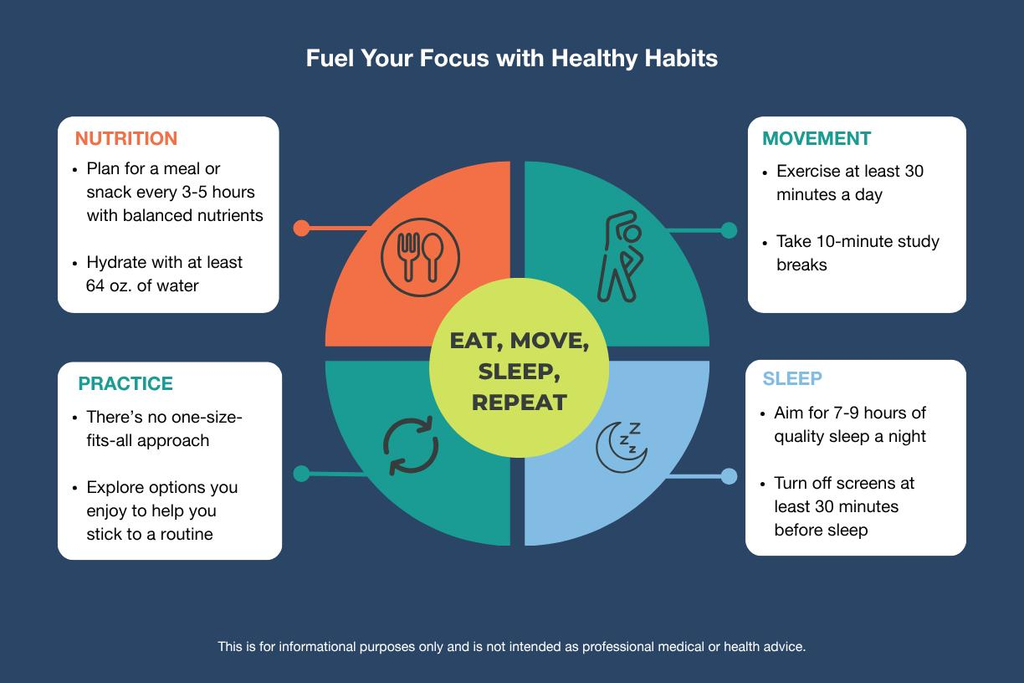
A common productivity mistake is focusing entirely on time.
But your energy and attention also matter.
If you’re exhausted, constantly stressed and sleeping poorly, adding more tasks to your schedule may not solve the problem.
Build recovery into your routine.
That can include:
- Adequate sleep
- Regular physical activity
- Nutritious meals
- Breaks during long study sessions
- Time with friends and family
- Hobbies
- Time away from screens
Rest isn’t necessarily wasted time.
It can be part of maintaining a sustainable routine.
If you’re experiencing persistent physical or psychological difficulties that interfere with everyday functioning, consider speaking with an appropriately qualified healthcare or mental-health professional.
9. Track Progress Instead of Chasing Perfection
Personal development is a long-term process.
You will have productive days.
You’ll also have days when you procrastinate, miss your schedule or don’t accomplish everything you planned.
That’s normal.
Instead of asking:
“Was I perfect today?”
Ask:
- What did I accomplish?
- What distracted me?
- What did I learn?
- What should I change tomorrow?
- What is one thing I can improve next week?
You can even keep a simple weekly progress journal.
Weekly reflection
This week I achieved: ______
My biggest distraction was: ______
Something I learned: ______
One habit I want to improve: ______
My priority for next week: ______
This creates a feedback loop that can help you adjust your approach.
A Simple Personal Development & Productivity Routine for Students
Here’s a practical starting framework:
Morning
- Review your priorities.
- Identify your most important task.
- Avoid immediately getting lost in notifications.
During classes
- Take useful notes.
- Mark areas you don’t understand.
- Ask questions when appropriate.
Afternoon
- Complete your highest-priority academic task.
- Use focused study sessions.
- Take meaningful breaks.
Evening
- Review what you learned.
- Work on personal or career skills.
- Prepare tomorrow’s priorities.
Before bed
- Reduce unnecessary screen time.
- Review your progress.
- Get adequate sleep.
Remember: the best routine is one you can realistically maintain.
Common Personal Development Mistakes Students Should Avoid
Even with good intentions, students can fall into several traps.
Trying to change everything at once
Start with one or two habits.
Comparing your progress with everyone else
People have different circumstances, strengths and starting points.
Depending entirely on motivation
Systems and routines can help when motivation is low.
Making unrealistic schedules
A schedule packed from morning until midnight may not be sustainable.
Consuming information without applying it
Reading ten productivity books won’t help much if you never implement what you learn.
Ignoring rest
Productivity should support your life—not consume it.
Conclusion: Become 1% Better, Consistently
Personal Development & Productivity aren’t about becoming a machine that studies every waking hour.
They’re about learning how to manage your time, attention, habits and goals while continuing to grow as a person.
Start with something simple.
Set one meaningful goal.
Create a realistic schedule.
Remove one major distraction.
Learn one valuable skill.
Improve one study habit.
Then repeat.
You don’t need to completely transform your life this week.
You just need to make your next decision slightly better than your last one.
Over time, those small decisions can become habits—and those habits can shape the person you become.
Your student years aren’t only preparing you for your next exam.
They’re preparing you for your next chapter
Personal Development & Productivity