Introduction: AI Is Changing How Students Learn
Imagine starting your day with an intelligent study assistant that helps you organize your notes, explains difficult concepts, creates practice questions and helps you identify gaps in your understanding.
That isn’t simply a futuristic idea anymore.
AI & Tech Integration is becoming increasingly relevant to education, work and everyday life. Students now have access to AI-powered tools that can support research, writing, coding, language learning, organization and personalized study.
But there’s an important difference between using AI to learn and using AI to avoid learning.
Students who understand how to use technology responsibly can potentially save time, explore concepts more deeply and develop skills that are increasingly relevant in a technology-driven workplace.
The key isn’t to let AI think instead of you.
It’s to learn how to use AI and technology to think better, practice more and work more effectively.
What Is AI & Tech Integration?
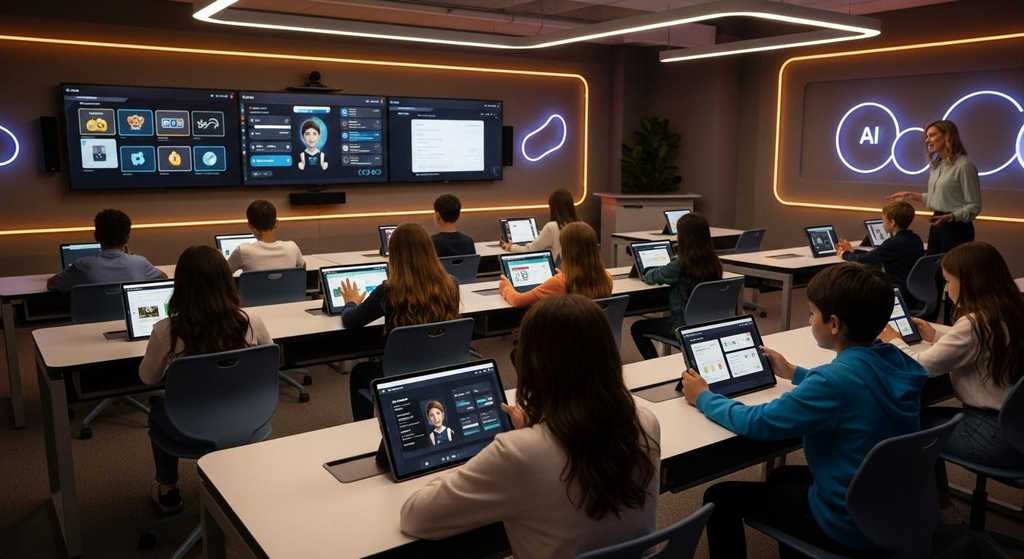
AI & Tech Integration refers to incorporating artificial intelligence and digital technologies into everyday activities, learning processes and workflows.
For students, this can include technologies such as:
-
- Generative AI assistants
-
- AI-powered research tools
-
- Digital note-taking applications
-
- Learning management systems
-
- Online educational platforms
-
- Coding assistants
-
- Translation and language-learning tools
-
- Productivity applications
-
- Data-analysis software
-
- Digital collaboration platforms
The goal isn’t simply to use more technology.
Effective integration means selecting the right technology for the right task.
For example, a student might use an AI tool to generate practice questions from a study topic, attempt the questions independently and then use the tool to explain mistakes.
That’s very different from simply asking AI to complete an assignment and submitting the output.
Why AI & Tech Integration Matters for Students
Technology is changing the skills employers expect from graduates.
Students are increasingly expected to understand not only their chosen subject but also how to work with digital tools.
AI literacy can involve understanding:
How AI works → What AI can do → What AI cannot reliably do → How to verify information → How to use AI ethically.
These skills can become valuable across many fields, including:
-
- Marketing
-
- Finance
-
- Healthcare
-
- Engineering
-
- Design
-
- Education
-
- Business
-
- Media
-
- Software development
-
- Research
AI isn’t necessarily a replacement for every human skill. Instead, students need to understand where technology can assist and where human judgment remains essential.
1. Use AI as a Study Assistant
One of the most practical applications of AI for students is personalized learning support.
Suppose you’re struggling to understand a complex topic.
Instead of repeatedly reading the same textbook paragraph, you could ask an AI tool to:
-
- Explain the concept in simpler language
-
- Provide a real-world example
-
- Create practice questions
-
- Compare two related concepts
-
- Explain a formula step by step
-
- Generate flashcards
-
- Quiz you on the topic
For example:
Weak prompt:
“Explain economics.”
Better prompt:
“Explain inflation to a first-year college student using a simple real-world example. Then give me five questions to test my understanding.”
The second prompt gives the tool clearer context and a specific learning objective.
However, students should still verify important information using textbooks, academic sources, instructors or reliable reference materials.
2. Improve Your Research Skills

AI can help students navigate large amounts of information, but it should not replace research skills.
A useful workflow is:
Step 1: Define the question
Clearly identify what you’re trying to discover.
Step 2: Find credible sources
Use academic databases, university resources, books, reputable organizations and peer-reviewed research where appropriate.
Step 3: Use AI for organization
AI can help summarize information you provide, identify themes or suggest questions for further research.
Step 4: Verify important claims
Check statistics, dates, quotations and factual statements against the original sources.
Step 5: Develop your own conclusion
Your assignment should demonstrate your understanding rather than simply reproduce AI-generated text.
This approach combines human research skills with technological assistance.
3. Learn Better With Personalized Practice
Traditional studying often involves reading the same material repeatedly.
AI can make practice more interactive.
For example, after studying a chapter, ask an AI tool to create:
-
- Multiple-choice questions
-
- Short-answer questions
-
- Case studies
-
- Scenario-based problems
-
- Flashcards
-
- Mock interviews
-
- Coding challenges
You can even ask the AI to gradually increase the difficulty.
For example:
“Give me one question at a time about digital marketing. Don’t show the answer until I respond. If I make a mistake, explain the concept and give me another question.”
This transforms passive studying into active practice.
4. Combine AI With Traditional Learning
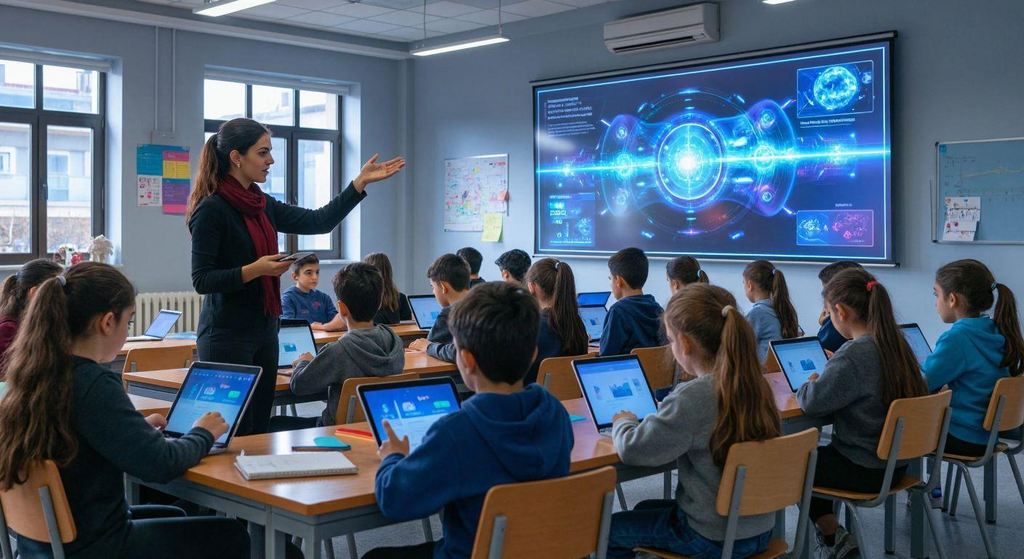
AI works best when combined with existing learning methods.
Instead of replacing:
Books + Teachers + Classrooms + Practice
think about adding:
AI + Digital Tools + Personalized Practice
For example:
Teacher: Introduces the concept
Textbook: Provides detailed information
AI: Explains difficult areas differently
Student: Practices independently
Assessment: Measures understanding
This creates a learning ecosystem where technology supports—not completely replaces—human instruction.
5. Use AI to Improve Productivity
Student life involves more than studying.
You may have assignments, presentations, group projects, extracurricular activities and personal responsibilities.
Technology can help organize your workload.
You could use digital tools to:
-
- Create task lists
-
- Organize deadlines
-
- Build study schedules
-
- Summarize your own notes
-
- Create presentation outlines
-
- Brainstorm project ideas
-
- Organize research
-
- Track progress
For example, instead of asking AI:
“Do my assignment.”
try:
“Here is my assignment requirement. Help me create a structured plan with research questions, sections and a realistic timeline. I will write the final content myself.”
This keeps the student in control.
6. Develop AI Literacy and Critical Thinking
One of the most important skills students can develop is critical thinking.
AI systems can produce convincing answers that may contain errors, outdated information, missing context or fabricated references.
Therefore, students should develop a habit of questioning AI output.
Ask:
Is this information accurate?
What is the original source?
Can I verify this claim independently?
Is the information current?
Does the answer provide enough context?
Could there be another interpretation?
Technology becomes much more useful when combined with human judgment.
7. Understand AI Ethics and Academic Integrity
AI & Tech Integration also creates important ethical questions.
Students should understand their school’s or university’s policies regarding AI-assisted work.
Potential issues include:
-
- Plagiarism
-
- Unauthorized assistance
-
- Fabricated citations
-
- Privacy concerns
-
- Copyright
-
- Bias
-
- Misleading information
-
- Overdependence on AI
If an institution requires students to disclose AI assistance, follow those requirements.
Students should also avoid entering confidential personal information, private academic records or sensitive data into AI systems unless they understand how that information is handled and have permission to do so.
Responsible technology use is part of becoming digitally competent.
8. Build Skills That AI Can’t Simply Replace

Learning AI tools is valuable, but students shouldn’t focus exclusively on technology.
Human skills remain important.
Develop:
-
- Communication
-
- Creativity
-
- Problem-solving
-
- Leadership
-
- Collaboration
-
- Emotional intelligence
-
- Critical thinking
-
- Adaptability
-
- Decision-making
Imagine two students applying for the same internship.
Both understand AI tools.
One can only operate software.
The other can use AI and communicate ideas, analyze problems, work with a team and make thoughtful decisions.
The second skill set demonstrates why AI literacy should be combined with broader professional development.
A Simple AI & Tech Integration Strategy for Students
You can start with a simple five-step process:
1. Identify the problem
What are you trying to accomplish?
2. Choose the right tool
Don’t use AI simply because it’s available.
3. Give clear instructions
Provide relevant context, goals and desired output.
4. Verify the result
Check important information against reliable sources.
5. Add your own thinking
Use your judgment, creativity and subject knowledge.
This approach can help students use technology without becoming overly dependent on it.
Common Mistakes Students Should Avoid
Mistake 1: Copying AI-generated answers
Using AI output without understanding it can weaken your learning.
Mistake 2: Trusting every AI response
AI can make mistakes.
Mistake 3: Using vague prompts
Better instructions usually produce more useful results.
Mistake 4: Ignoring academic policies
Always understand your institution’s AI rules.
Mistake 5: Becoming dependent on technology
Your objective should be to increase your capabilities, not outsource every thinking task.
The Future of AI & Tech Integration in Education
AI technology will continue to evolve.
Students may increasingly encounter AI-powered tutoring, adaptive learning platforms, automated feedback systems, intelligent productivity tools and new forms of digital collaboration.
But technology alone won’t determine the quality of education.
The most important factor will remain how intelligently people use it.
Students who develop both technical literacy and human skills can be better prepared to navigate an evolving digital environment.
The future isn’t simply about knowing how to use AI.
It’s about knowing when to use it, how to use it and when not to use it.
Conclusion: Learn With AI, Don’t Let AI Learn for You
AI & Tech Integration is changing the way students can study, research, organize information and prepare for future careers.
Used responsibly, AI can become a useful learning companion.
It can help explain difficult concepts, generate practice questions, organize ideas and support productivity.
But students should remain the decision-makers.
Read the original sources. Ask questions. Verify information. Develop your own ideas. Follow academic-integrity rules. Continue building communication, creativity and critical-thinking skills.
The goal isn’t to become dependent on AI.
The goal is to become a smarter, more adaptable learner who knows how to use technology effectively.